
The Riverhill Bee Blog: Part I - Spring in the Hives
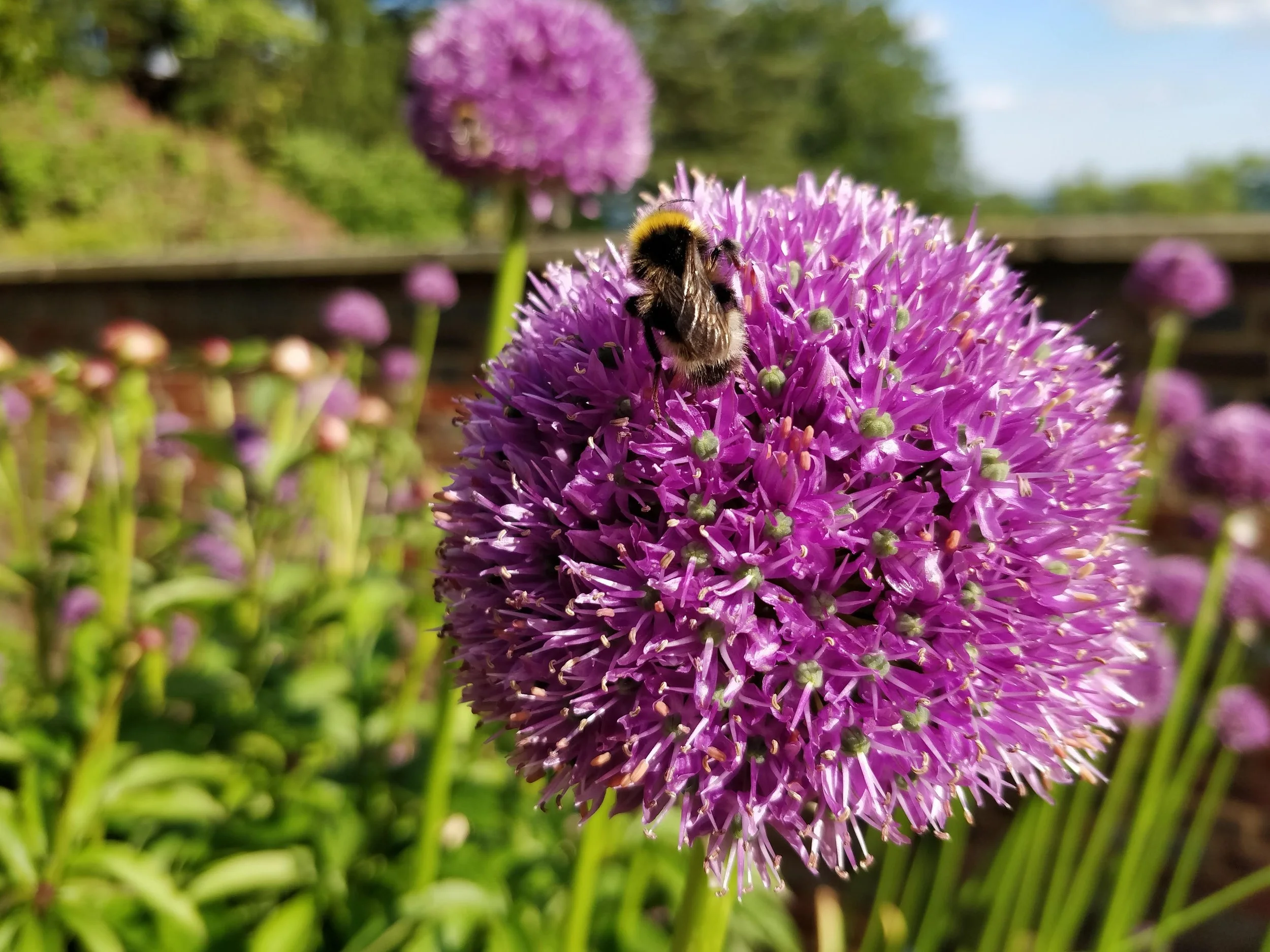
Welcome to our new Bee Blog, written by our resident Beekeeper, Thomas. Hopefully, this will be a seasonal occurrence, so we can all learn more about our favourite pollinators and see what they get up to during the year.
As visitors wander through the stunning Himalayan Gardens, cultivated over the decades by Riverhill’s team of expert gardeners, another group of workers flit tirelessly between flowers in search of sweet treats to bring back to their wooden homes. Although the gardens are home to many different types of pollinators, from butterflies and beetles to wasps, hoverflies and wild bees, arguably the most famous is that model of industriousness, the western honey bee. As is common with many of England’s great houses, hives have long been kept at Riverhill in a discreet apiary, safely removed from the general public. Up until 2024, that apiary was located at the furthest end of the gardens nestled on the edge of the wildflower meadow above the maze.
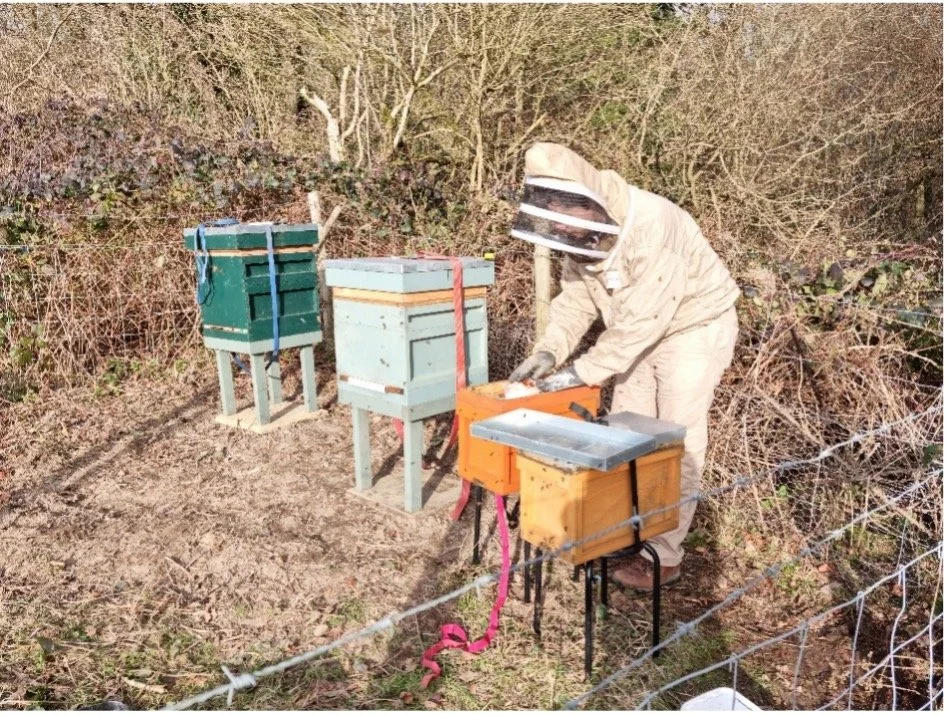
The old apiary site
However, the exposed nature of that site which saw hives toppling over during strong winter winds, coupled with the beekeeper’s weekly arduous trek up the hill, led to the decision to relocate the hives to a more accessible spot. Since then, the number of colonies has risen, with around half a million honey bees now calling Riverhill home
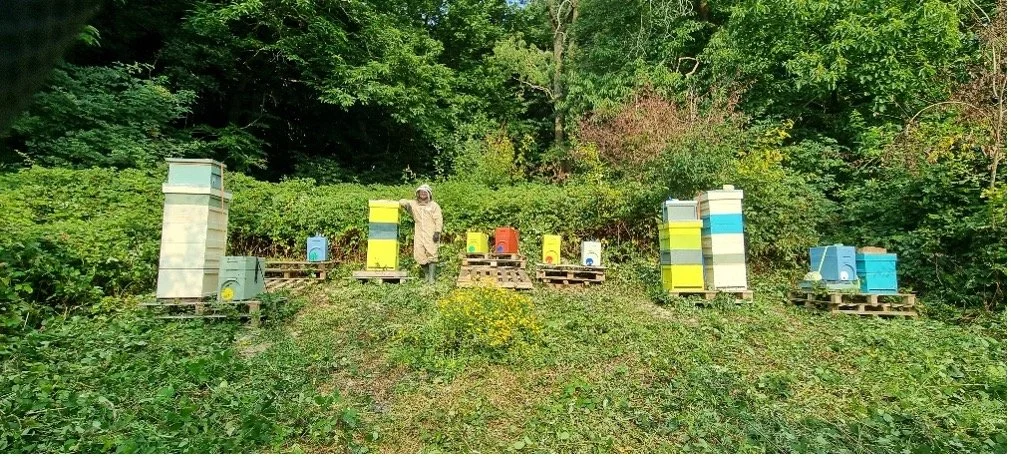
The new apiary site
With the days lengthening and temperatures rising, the apiary has become a hive of activity. Whilst the queen heading each colony increases her rate of egg laying, the workers perform a variety of essential tasks within the hive, depending on their age. After emerging from their capped cells, the youngest workers, up to around three days old, clean brood cells in preparation for the queen to lay new eggs. Then for the next three weeks, their older sisters feed the growing larvae, attend to the needs of their royal mother, secrete wax used in the construction of comb, and diligently guard the hive’s entrance. Having performed all of these roles, the most senior worker bees are then promoted to forager and dispatched to collect the nectar and pollen vital for feeding the growing colony. This the final position in the brief but busy career of each worker bee and one they will perform until their life ends at the great age of six weeks.
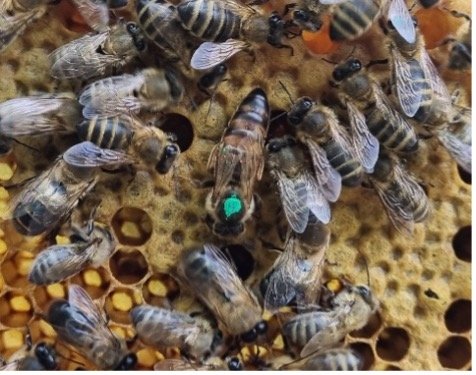
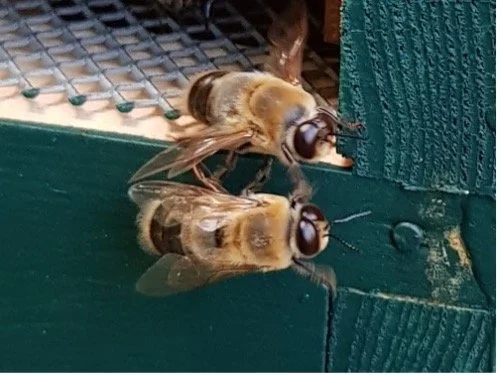
1. The new queen emerges, 2. The queen and her entourage, 3. Drones prepare for flight
The increase in the queen’s rate of egg laying sees the colony’s population rise rapidly. This rise creates a scarcity of empty comb cells available for the queen to continue laying eggs or for workers to store nectar and pollen, and as new bees emerge, the physical space within the hive becomes crowded. The result of this congestion can trigger the instinct to swarm, which would see a queen cell created and the departure of the old queen and half the colony from the hive to establish a new home elsewhere. After the emergence of the new queen in the original hive, workers would then escort their new monarch to meet male bees called drones. Attracted by the enticing smell of their pheromones, the queen could mate with many dozens of these potential suitors before returning to the hive to produce the next generation of bees and secure the future of the colony.